

Product Guide
The right product depends on your wood. Not the picture on the website.
Colour, finish, and protection all behave differently depending on what species you're applying to. Here's how to make the right choice before you open the tin.
7 minute read · Applies to: all interior wood floors and furniture
The most common product mistake isn't choosing the wrong brand — it's choosing the right product for the wrong wood. Osmo oils are transparent finishes, which means the final colour you get is determined almost entirely by your wood species, not the colour swatch you saw online.
Why “transparent” doesn’t mean “clear”
Transparent means you can still see the wood grain through the finish. It doesn’t mean the product won’t change the colour of your wood — it will, always, to some degree.
Think about what happens when you drip water on bare oak: it goes darker until it dries. With oil, that darkening is permanent. The oil soaks into the wood, dries with a wet look, and stays that way. On oak and walnut you’ll see a significant colour shift — the grain becomes richer and deeper. On pine the change is more subtle, but it still happens.
This isn’t a flaw in the product. It’s simply how oil works. The question is whether the result you’ll get on your specific wood matches what you’re expecting.
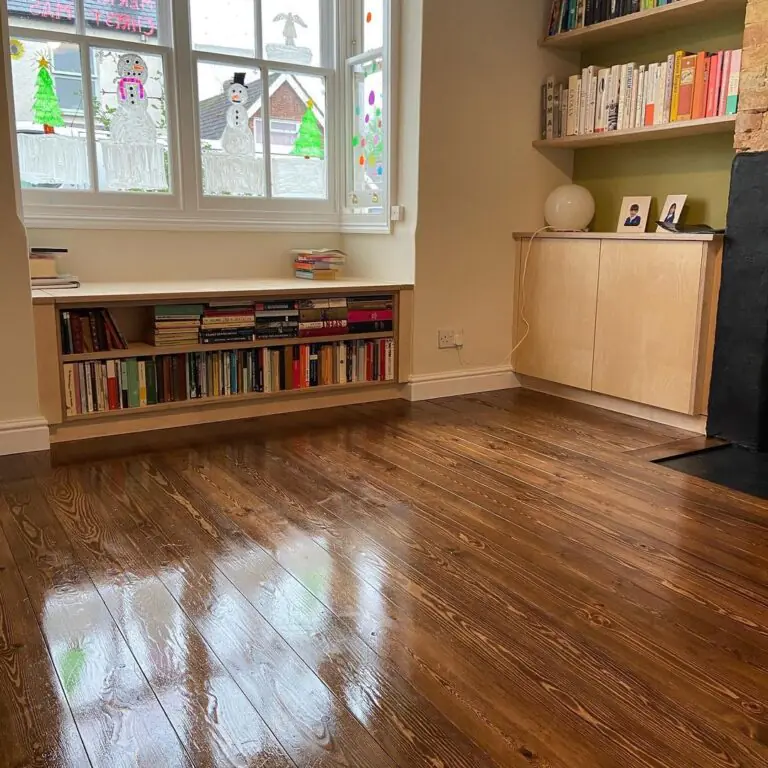
Polyx Oil Matt on pine — warm and rich. The colour deepening from the oil is clearly visible.
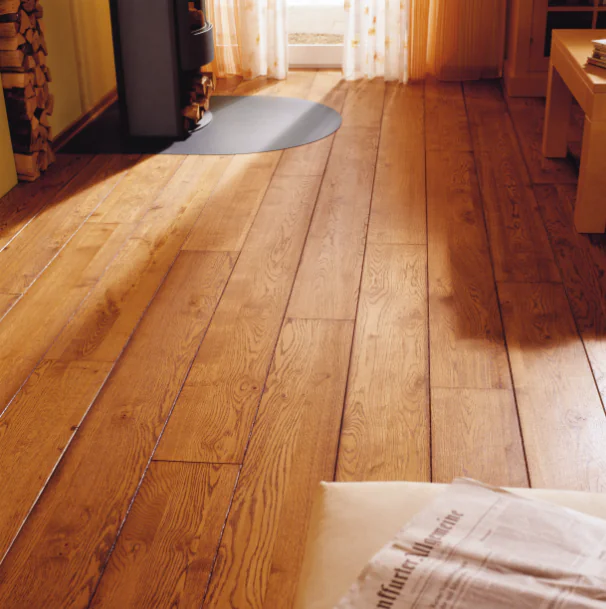
Polyx Oil on oak — a golden, warm tone. The same product on a different species produces a noticeably different result.
Always test first
Every Osmo product is available in sample sachets and tester pots. Apply to your actual boards — not an offcut from a different batch — and live with it for 24 hours before deciding. This one step prevents the vast majority of returns and disappointments.
The species question
different. The same colour on rustic grade oak (more colour variation, darker knots) and prime grade oak (more consistent) will also look different. There is no way to predict the exact result from a photograph online — the image was taken on a specific wood species, in specific lighting, at a specific angle.
What you can do is test. Every time, on your actual wood.
Colour matching across rooms
If you're matching a finish to an existing floor in an adjacent room, testing becomes even more critical. Even the same product on the same species from a different batch can vary slightly. Buy enough product for the whole job from the same batch where possible.
If you want to keep the wood looking natural — use Raw
The single most common mistake is applying too much. Osmo Polyx Oil is not like emulsion or gloss paint — applying it thickly doesn’t improve coverage or durability. It does the opposite: the oil sits on top of the wood rather than soaking in, drying times become excessive, and the surface can stay tacky for days or never fully harden.
A clear oil will not preserve the natural colour of your wood. If keeping your floor looking as close to its unfinished state as possible is the goal, you need Osmo Polyx Oil Raw 3044.
Raw gives a matt, barely-there finish that keeps the wood close to its unfinished tone. It’s particularly popular on light oak where people want the natural, pale look without the amber warmth that standard clear oil brings.
Raw requires careful application — thin, even coats on well-prepared wood. Applied too thickly or on uneven preparation, it can leave a milky or whitish finish that’s difficult to correct. Done properly, it’s one of the most beautiful results in the Osmo range.
Raw on pine
Raw works well on oak but can look slightly milky on some pine species even when applied correctly. If you're working with pine and want a natural finish, test Raw carefully on your actual boards before committing to a full floor.
Dense hardwoods — you may need Extra Thin
Standard Polyx Oil is formulated for oak, pine, and most common wood species. If you’re working with a particularly dense hardwood, standard Polyx can sit on the surface rather than penetrating properly. The oil doesn’t absorb, it pools, and you end up with a surface film rather than a proper penetrating finish.
Osmo Polyx Oil Extra Thin has a lower viscosity that allows it to penetrate where standard Polyx can’t. If you’re unsure whether your species is dense enough to warrant it, test a small area with standard Polyx first — if it’s still sitting on the surface after a few minutes rather than soaking in, switch to Extra Thin.
High humidity rooms
Osmo is perfectly suitable for bathrooms, kitchens, and rooms with fluctuating humidity. In these situations, apply a coat of Osmo Wood Protector (4006) as a base coat before your floor oil. This adds an additional barrier against moisture ingress — particularly useful in rooms that see significant temperature and humidity variation.
Sand and prepare as normal, apply one coat of 4006, allow to dry fully, then apply your two coats of floor oil over the top. The same approach is worth considering for hallways and other high-traffic areas.
High humidity doesn't mean Osmo won't work
Wood floors have been successfully finished with Osmo in Victorian terraces with original floorboards, busy family bathrooms, and range cooker kitchens for decades. The 4006 base coat is an added layer of insurance, not a workaround for a product limitation.
If you have dogs
Osmo Polyx Oil is a durable finish, but it is not resistant to dog saliva or urine. If you have a dog that drools on the floor regularly or has the occasional accident, expect to need to reapply more frequently than the standard maintenance schedule suggests.
This isn’t a criticism of the product — no penetrating oil finish is designed to resist sustained biological contact of this kind. A maintenance coat of Osmo Maintenance Oil on affected areas as needed — no sanding required — is all that’s needed to keep the floor in good condition.
Original or Rapid?
Polyx Oil Original dries in 8–10 hours between coats. The longer working time is a genuine advantage for first-timers — more opportunity to correct uneven areas before the coat sets. Polyx Oil Rapid dries in 4–6 hours, making two coats in one day achievable. It’s favoured by professional floor layers working to a schedule. If this is your first time using Osmo, Original is the better choice.
Satin, matt, semi-matt or gloss — which sheen is right for your floor?
Standard Polyx Oil is available in four sheens: matt, semi-matt, satin, and gloss. The choice is purely aesthetic — none is more durable than another. Matt gives the flattest, most contemporary look. Semi-matt sits between matt and satin and is a popular choice for oak floors where you want a natural feel without going fully flat. Satin gives a subtle sheen that enhances the warmth of the wood. Gloss is the most reflective and works best where you want to make a real feature of the floor.
If you’re unsure, semi-matt or satin are the most forgiving options in high-traffic areas — they tend to show less day-to-day wear than a flat matt finish.
Not sure which product is right for your project?
Call us on 0208 236 2366 — we've been selling Osmo for over 15 years and answer this kind of question every day. Or browse the full range and order sample sachets below.